

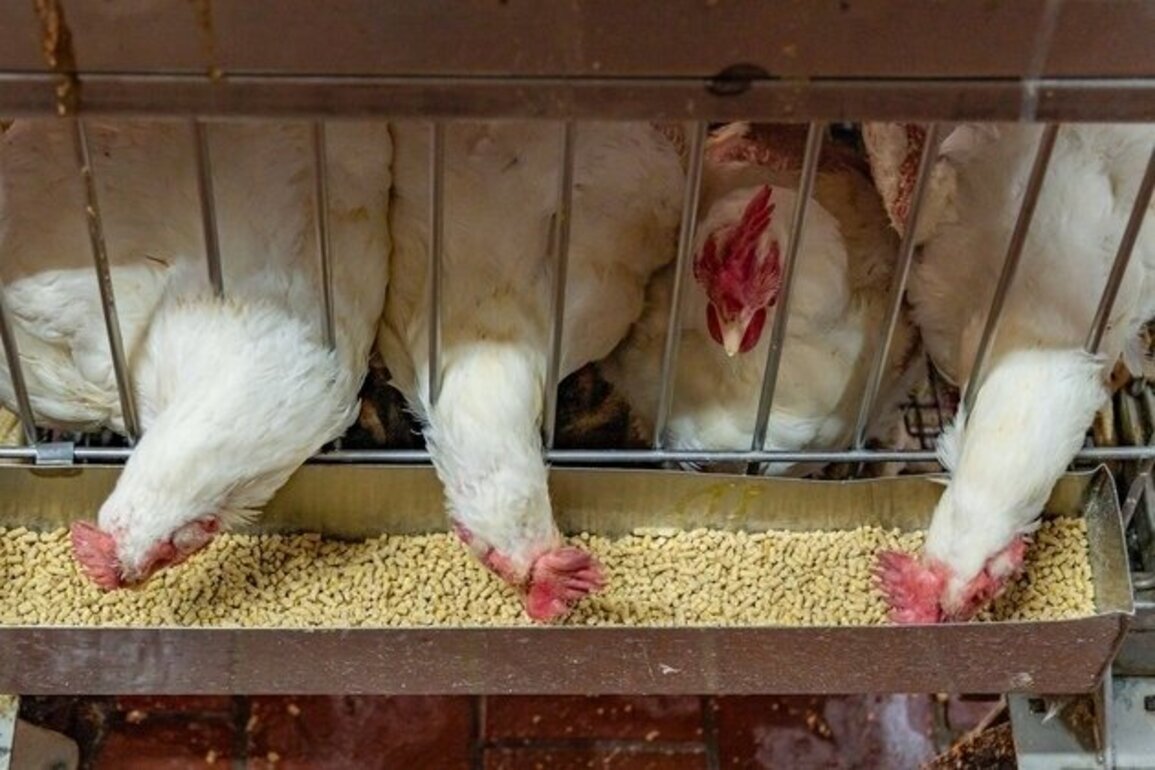
North Carolina is home to a large concentration of industrial animal operations, which raises questions about conditions for both animals and workers.
North Carolina ranks third in the nation for hogs and pigs, with eastern North Carolina housing a massive population of confined animal feeding operations. The Cape Fear River Basin has the highest density of such large operations in the world, according to Cape Fear River Watch.
Christopher Heaney, associate professor of environmental health and engineering at Johns Hopkins University, said workers in this industry face unique threats to their health and safety. He explains about 70% of antimicrobial drugs in the country go to food-producing animals, increasing the presence of antimicrobial-resistant bacteria.
"If somebody's health status were to change, or if somebody was to get a skin cut or a laceration, or have some kind of an opening on their skin, like a skin boil or a pimple, the prospect of an antimicrobial-resistant infection is very, very real for these workers," Heaney explained.
Avian flu is also a growing issue in poultry operations. Heaney noted when avian flu is identified in a large operation, workers are the ones who cull the herd. He is concerned workers do not feel empowered to speak out when exposed to dangerous conditions.
Heaney added there are ways to clean the air in confined animal feeding operations, for instance, through improved ventilation and dust mitigation. But such solutions could have unintended consequences.
"A lot of those challenges create another concern about what's surrounding these facilities," Heaney pointed out. "Are you essentially reducing the health concern for the worker but you're emitting a greater amount of agents of concern to surrounding communities and neighborhoods?"
Confined animal feeding operations in North Carolina are disproportionately located near communities of color. Heaney argued there needs to be structural changes to the system. He recommended the reduction of the use of antimicrobial drugs, improved ventilation, dust suppression and increased air exchanges.
"It's the sanitary conditions inside the facilities. It's the stocking densities of the animals," Heaney outlined. "Structural controls could be greater support of the development of new biologic and therapeutics and vaccines. Make use of technologies that already exist to be able to prevent and mitigate these spillover effects."
Source: Public News Service